Submarine Threat Axis
U-boat and submarine systems applying attritional pressure on shipping lanes.
NAVAL
- Type VII U-boat
🇩🇪 Germany • 1940
- Fletcher-class Destroyer
🇺🇸 United States • 1942
- Tirpitz
🇩🇪 Germany • 1941
Submarines, escorts, and naval assets central to convoy warfare and anti-submarine adaptation.
Battle Map Context
Convoy warfare centered on escort coordination, submarine stealth cycles, and anti-submarine adaptation.
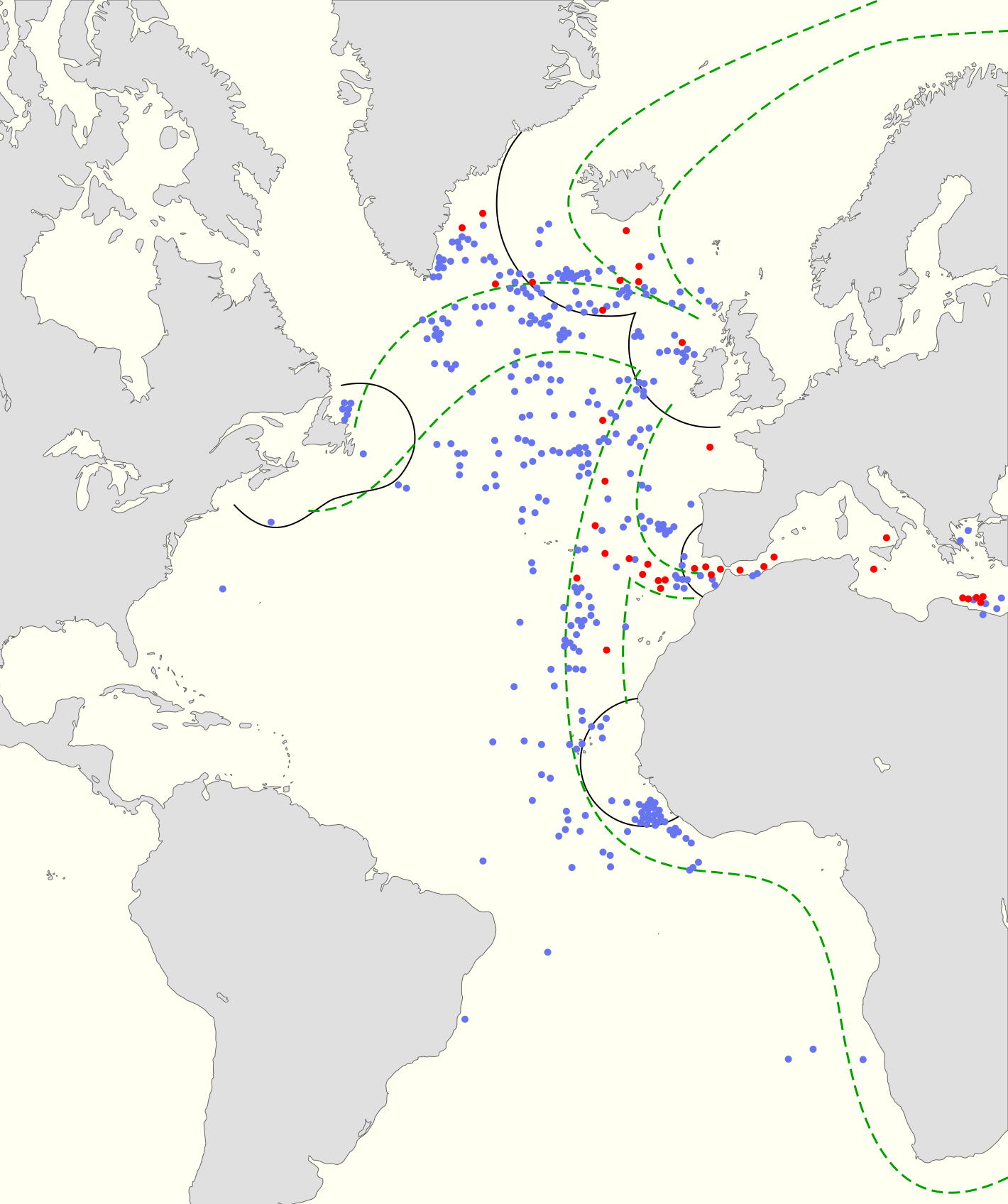
OPEN INTERACTIVE MAP
Map source: The battle of the Atlantic 1941 map (Wikimedia Commons)
Submarine Threat Axis
U-boat and submarine systems applying attritional pressure on shipping lanes.
🇩🇪 Germany • 1940
🇺🇸 United States • 1942
🇩🇪 Germany • 1941
Escort Screen
Destroyers and escort vessels protecting convoy integrity.
🇩🇪 Germany • 1940
🇺🇸 United States • 1942
🇩🇪 Germany • 1941
Germany • NAVAL
Type VII U-boat
The Type VII was the most common U-boat type in the German Kriegsmarine during WW2, with 703 built. These submarines waged the Battle of the Atlantic, the longest continuous campaign of the war.
United Kingdom • NAVAL
HMS King George V
British battleship that helped sink Bismarck in May 1941.
United States • NAVAL
Fletcher-class Destroyer
Large U.S. wartime destroyer class used for escort, AA, and anti-submarine roles.
Germany • NAVAL
Tirpitz
German sister ship of Bismarck, tied down major Allied naval resources in Norway.
United Kingdom • NAVAL
HMS Warspite
Modernized British battleship with significant WW2 service in Mediterranean and Normandy.
Italy • NAVAL
Littorio-class Battleship
Modern Italian fast battleship class built for Mediterranean fleet actions under air and naval threat.
France • NAVAL
Richelieu
French fast battleship that later served with Allied fleets after refit and modernization.